Pool League
4.6 5.97K Reviews
Analysis By AppCompare
If you play in an APA or CPA pool league, Pool League is the kind of app that makes sense almost immediately. I found its value less in entertainment and more in keeping league information close at hand when I actually need it: before a match, while checking my standing, or when trying to remember what happened in a previous session. It is a focused sports app from American Poolplayers Assoc, and that focus is both its biggest strength and its clearest limitation.
My overall view is simple: this is a useful companion for organized pool players, but not a general pool-training app and not a replacement for the social, face-to-face side of league play. If your connection to pool runs through an APA or CPA league, it deserves a place on your phone. If you only want drills, rules explanations, or a way to play against strangers online, I would look elsewhere.
What the app is really useful for on league night
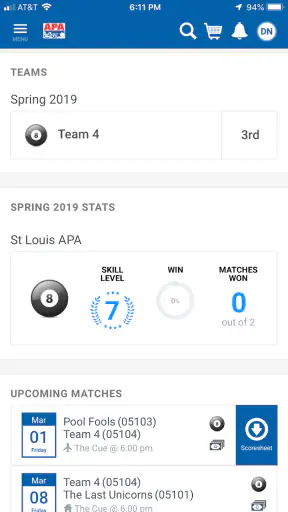
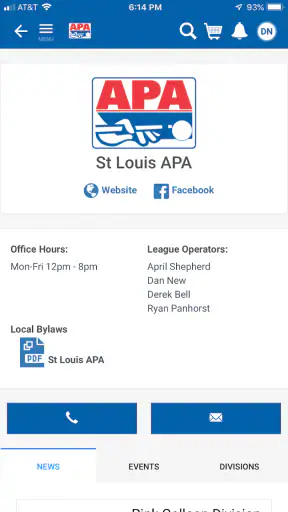
The store summary calls it the official app of the APA and CPA Pool Leagues, and that description tells you more about its purpose than the short label “Pool League.” I approached it as a practical league utility rather than a game. The experience is built around the needs of players who already belong to an organized pool environment, so its usefulness depends heavily on whether your local league activity is connected to those systems.
That distinction matters. A casual player may open it expecting a digital pool table, aiming practice, or a collection of instructional videos. That is not the reason to install it. The app is better understood as a mobile doorway into league-related information. It helps reduce the small bits of uncertainty that can surround a match: where you stand, what has happened, and what you may need to check before or after competition.
In everyday use, I like apps that remove the need to remember several separate details. For a league player, the phone is already the natural place to check plans and messages, so having pool-related information available there feels more convenient than relying on paper notes or trying to reconstruct a season from memory. The benefit is not dramatic, but it is repeated, which is exactly what makes a utility app worthwhile.
One realistic scenario is a weeknight match after work. I might be rushing from the office, unsure whether I have remembered the latest team position or wanting to review the context of the evening before arriving at the venue. Instead of asking another player to search for the information, I can use the app as a quick reference. That kind of moment is where Pool League earns its keep: not through spectacle, but through reducing friction around an activity I am already committed to.
A focused tool rather than a broad sports platform
Many sports apps try to cover everything: news, live scores, fantasy tools, training, social posts, and video. Pool League takes a narrower route. That makes it easier to understand, because the app does not need to compete with a general sports dashboard for attention. Its audience is already defined by league participation, and the app’s role is connected to that relationship.
The narrow focus also means I would not install it simply because I enjoy billiards. Someone who plays casually at a bar or owns a table at home will probably get more value from a dedicated training app, a rules reference, or an online pool game. Those alternatives serve different goals. Pool League is most convincing when the question is not “How can I improve my break?” but “How can I stay connected to my organized league?”
The app is free, which lowers the risk of trying it. I appreciate that because its usefulness is personal and situational: a regular league participant may check it often, while a player between seasons may have little reason to open it. There is no need to make a financial commitment just to discover whether it fits the way your team operates.
Why the reception feels encouraging, with a sensible caveat
Pool League holds a 4.6 average from around nineteen thousand ratings, with roughly six thousand written reviews. It has passed one hundred thousand installs, so it is not an obscure experiment with only a handful of users. Those figures suggest that the app has found a real audience among people who want mobile access to APA and CPA league information.
I would still treat ratings as a starting point rather than a guarantee. A league utility can feel excellent when it displays exactly what a player needs and frustrating when a local workflow depends on information being entered or maintained elsewhere. In other words, a strong average tells me the basic idea works for many people, but my own experience would still depend on how closely my league’s habits match the app’s intended use.
That is an important trade-off. A general sports app can often provide a polished experience for broad, public information. A league-specific app can be more relevant, but relevance depends on the organization behind it and on the player’s membership. Pool League wins by being specific, not by trying to be universal.
Where Pool League stands out, and where it asks for patience
The strongest practical advantage is context
The most valuable feature of this app is its context. It is not asking me to translate generic sports information into pool-league terms. The app exists around the APA and CPA environment, so the information I look for is connected to the kind of competition I am actually participating in. That saves mental effort, especially for players who do not want to maintain a separate spreadsheet or depend on screenshots sent through a team chat.
A useful habit is to check the app at three different points in the week rather than only during a match. Before league night, I can use it to orient myself. After the session, I can review what has changed or confirm the current picture. During a busy part of the season, those short checks can be more reliable than relying on memory. The app becomes a small routine instead of an emergency tool.
Another non-obvious benefit is that it can help a player separate league information from general pool conversation. Team chats are often full of jokes, side discussions, schedule questions, and last-minute comments. A dedicated league app gives me a more focused place to look when I need the competitive context itself. I would not abandon group communication, but I would rather not treat a scrolling conversation as my only record of league details.
It can also be useful for players who are still learning how their league works. Experienced teammates may know where to look and what matters, while a newer player may feel lost when people discuss standings, sessions, or team progress. Having a purpose-built app gives that player an independent reference point. It does not replace asking teammates questions, but it can make those questions more specific and less frequent.
The experience depends on your league connection
The central limitation is also obvious once you think about it: the app has little reason to exist for someone outside the APA or CPA league ecosystem. This is not a criticism of the design so much as a boundary of the product. A casual pool fan may download it, browse briefly, and then find that the information is not relevant to everyday play.
I would also avoid treating it as a complete record-keeping solution for every personal pool activity. If I want to track practice hours, break success, shot selection, or improvement over time, I need a different tool or my own method. Pool League is league-centered, not a personal coaching journal. That distinction prevents disappointment and helps clarify what the app should be responsible for.
There is a second kind of friction: any league app can become less useful when players do not know which information should be checked there and which information still comes through their local team or league contacts. I would keep using normal communication for urgent changes and treat the app as an important reference, not as a reason to stop paying attention to teammates and local organizers. That is a practical habit, especially on match days when plans can change quickly.
What the version and device requirements mean in practice
The current version is 3.18.56, and Pool League supports devices running Android 5.1 or later. That broad minimum makes it accessible to people who keep an older phone for everyday use. I see that as a positive for a league community, where not everyone upgrades devices at the same pace.
At the same time, an older supported operating system does not automatically mean every phone will feel equally quick or comfortable. Screen size, device age, and the condition of the phone can all affect how pleasant a utility app feels. I would especially recommend checking it before league night rather than installing it in the parking lot and expecting a first-time setup to go perfectly under pressure.
The content rating is Teen. That is worth noting for families who share devices or for younger players asking whether the app is appropriate to install. The rating does not change the app’s practical identity: it remains a sports-oriented league tool, not a pool simulation or a social game designed around casual play.
Small workflows that make it more useful
I found three habits particularly sensible for getting more from a focused app like this. First, I would open it before leaving for the venue, when there is still time to resolve confusion through the usual team channels. Second, I would use it after the match while the evening is fresh, rather than waiting until the next week. Third, I would avoid depending on memory alone when comparing one session with another; checking the app regularly makes the season easier to follow.
A fourth tip is to use the app as a shared reference during team conversations, not as a substitute for conversation. If two players are looking at the same league information, it becomes easier to discuss what needs attention. That can be especially helpful for a captain or experienced player helping a newcomer understand the rhythm of a season.
The trade-off is that this workflow only pays off when I build the habit. Installing the app once and opening it months later will not reveal much value. Its strength is cumulative convenience: each quick check prevents a little uncertainty from building up. Players who dislike routine reference tools may find it less compelling, even if they technically belong to the target audience.
Who should install it, and who should skip it
I would recommend Pool League to active APA or CPA league players, especially those who regularly need a clearer view of their season than a group chat provides. It is also a good fit for newer members who want one dedicated place to orient themselves, and for players who move between work, home, and league venues and prefer not to carry paper notes.
Captains and highly involved team members may find the focused access particularly convenient because they are often the people answering questions from others. The app can help them point teammates toward the same source instead of repeatedly explaining where a detail came from. I would not claim it eliminates all coordination, but it can make routine coordination less scattered.
I would skip it if my pool activity is entirely casual, if I belong to a different organization, or if my main goal is technical improvement. For drills, cue-ball control, break practice, and shot visualization, a training-focused app is the better choice. For online competition, a digital pool game is more appropriate. For broad billiards news, a sports-news source will probably offer more variety.
I would also think twice if I rarely use mobile reference apps and already have a dependable local system that works for me. Free installation makes experimentation easy, but not every player needs another app. The right question is whether it will replace a recurring inconvenience, not whether it contains enough material to justify occupying a place on the phone.
How it compares with the usual alternatives
Compared with a team group chat, Pool League should be more focused and easier to revisit, while the chat remains better for immediate conversation and informal updates. Compared with paper schedules or a personal notebook, the app is more convenient for carrying league information around, but handwriting can still be faster for private notes about my own game.
Compared with a general sports app, it is much more relevant to APA and CPA league participation but far less useful for following unrelated sports. Compared with a pool-training app, it supports the organization around competition rather than the mechanics of the shot. These are not interchangeable products, and choosing between them depends on the problem I am trying to solve.
That comparison also explains why I would not judge Pool League by the standards of a flashy game. It does not need elaborate animation or a long session loop. Its success is measured by whether I can find the league context I need with less hassle than before. On that narrower test, it makes a convincing case.
My verdict after weighing the convenience against the limits
Pool League is a specialized, free sports app with a clear audience and a practical purpose. American Poolplayers Assoc has kept the concept centered on organized APA and CPA play, and that focus gives the app more value than a generic billiards label would suggest. With an average of 4.6 and more than one hundred thousand installs, it has clearly become a familiar tool for many league participants.
My recommendation is conditional but positive: install it if your pool life is tied to an APA or CPA league, then make it part of your before-and-after-match routine. Do not expect a training coach, a digital table, or a universal pool community. Its meaningful weakness is its narrow scope, but that same narrow scope is why it can be more useful than broader alternatives when league information is what I need.
For the right player, the app quietly solves a real problem: keeping organized pool participation easier to follow from a phone. For everyone else, the best decision may be to skip it and choose a tool built around practice, online play, or general billiards content. If you want a league companion rather than a pool game, Pool League is a sensible download.
FAQ
What is Pool League, and what can I do with the app?
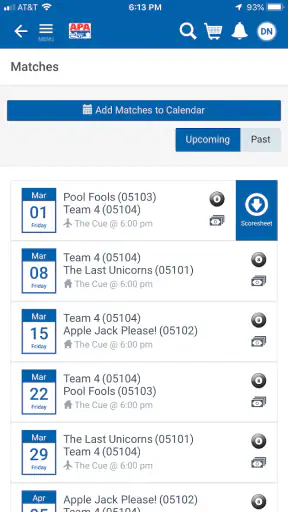
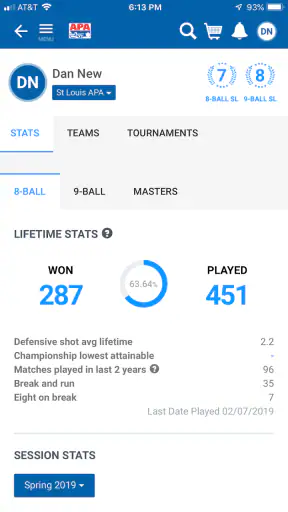
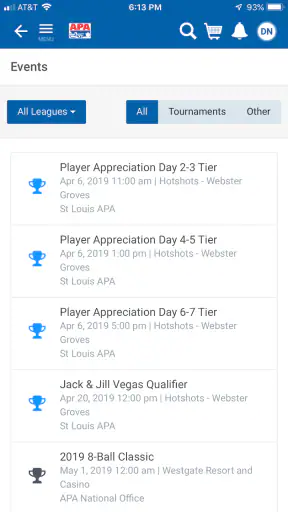
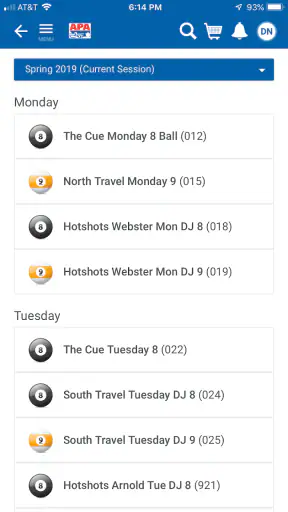
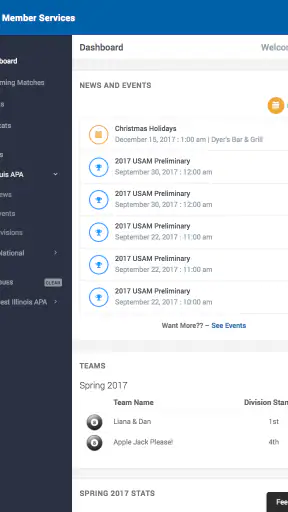
Pool League is designed for players and organizers who want to manage and follow pool competitions from a mobile device. Depending on the league setup, you can usually view schedules, standings, match results, teams, player information, and upcoming fixtures. It is especially useful for keeping league details in one place instead of relying on paper records, messages, or separate spreadsheets.
Do I need to create an account to use Pool League?
An account may be required for features such as joining a league, registering as a player, entering results, managing a team, or communicating with other participants. Some information, including public standings or schedules, may be available without signing in, depending on how each league is configured. Before downloading, check which permissions and registration details the app requests and whether your local league supports the platform.
Can Pool League be used for both players and league organizers?
Yes, Pool League is generally intended to support both sides of a competition. Players can use it to check fixtures, results, rankings, and team information, while organizers may have tools for creating competitions, managing rosters, recording scores, and updating standings. The exact options can vary according to user role, subscription level, or the settings selected by the league administrator.
Does Pool League require an internet connection?
Pool League primarily depends on an internet connection to synchronize schedules, standings, player data, and match results with the league system. You may be able to open previously loaded information while offline, but updates and newly entered results might not appear until the device reconnects. For the most reliable experience, use a stable Wi-Fi or mobile data connection when checking live league information.
Is Pool League free to download and use?
The app may be free to download, but some leagues or advanced management features could involve fees, paid memberships, or charges handled by the organization using the platform. Availability of premium tools can differ by region and by the league administrator’s plan. Review the app-store listing and any in-app payment information carefully before subscribing, especially if you only need basic schedules and results.
Pros
- Simple match tracking for casual pool leagues
- Useful for organizing players
- teams
- and league schedules
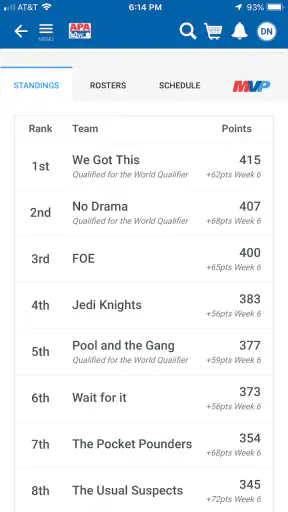
- Clear standings help participants follow league progress
- Convenient access to results from a mobile device
- Can reduce paperwork for league organizers
Cons
- May be too basic for large
- professional leagues
- Some features may depend on organizer participation
- Entering results manually can become time-consuming
- Limited value if your league is not registered in the app
- Users may need time to learn the league management tools